 Marin County Air Duct Cleaning
Marin County Air Duct Cleaning
Marin County Air Duct Cleaning
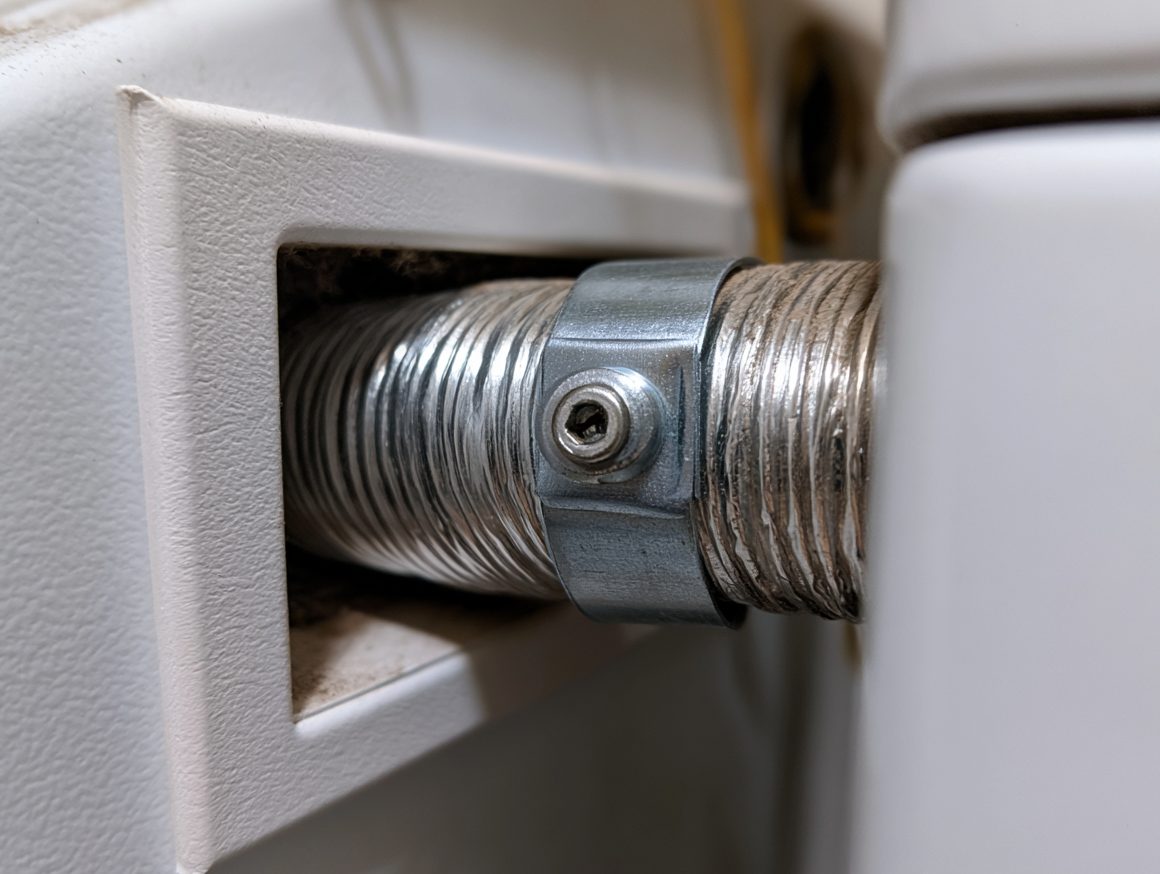
A dryer vent doesn't look like much, just a metal tube running from the back of the machine out to an exterior wall. Most people never think about it until something goes wrong. But lint is one of the most flammable materials in your house, and every load of laundry sends a little more of it into that tube. Over time it packs into the elbows, the screen termination, the long straight runs, until air can barely get through. We see this all the time on calls around San Rafael, where a lot of the original vent runs are longer than today's code would allow, and nobody ever went back and shortened them when the siding or roofline got redone. A vent that's gone five or ten years without attention isn't just making your dryer work harder. It's sitting there as a real fire risk, quietly, behind the wall.
Here's what we'll walk through: the warning signs worth paying attention to, why the type of vent material actually matters, what our cleaning process looks like, and how often you really need this done. A blocked vent line often goes hand in hand with buildup in the rest of your home's air duct system, so it's worth having both looked at during the same visit.
The clearest sign is time. Clothes that used to dry in a single cycle start needing two or three, even for a normal-sized load. You might also notice the dryer running hotter than usual, a faint burning smell partway through a cycle, or the laundry room feeling more humid than the rest of the house. One thing that surprises people: if your lint trap is spotless every time but your clothes still aren't drying, that's actually a worse sign than a dirty trap. It usually means the blockage is further down the line, somewhere you can't see it. A simple check you can do yourself is to step outside while the dryer's running and look at the exterior vent hood. If the flap barely moves, or you can't feel much air coming out, lint has built up somewhere along the run. We run into this a lot in San Anselmo and other older neighborhoods, where vent lines were extended or rerouted during a past remodel. Those extra bends are usually the first place lint collects.
The type of vent material running through your walls makes a real difference, both for performance and for safety. Rigid metal duct, whether it's galvanized steel or aluminum, is the standard for good reason. It's smooth on the inside, so lint has less to grab onto, and it holds up well to repeated cleanings. Semi-rigid metal, the kind that looks flexible but has ribbed metal walls, works fine for short connector runs, though it does restrict airflow more than rigid pipe. What we really want homeowners to watch for is flexible foil or plastic accordion duct. The ridges inside catch lint constantly, and it's actually banned under most current building codes because it's linked to so many dryer fires nationally. If your home still has this type behind the dryer, it's worth mentioning to us at your next cleaning, even if that's not the reason you called.
We start by disconnecting the line at the dryer and checking the exterior termination point, so we know how bad the blockage really is before we get to work. From there, we run flexible rotary brushes through the entire vent, working from the connection at the dryer out to the exterior hood, breaking up the packed lint at every bend along the way. A high-volume vacuum pulls everything out as we go, so loosened lint doesn't just settle back down further along the line. Most single-family homes take under an hour from start to finish, though it can run longer if the vent is unusually long or has several tight bends hidden behind finished walls. Once everything's clear, we check the exterior damper to make sure it's opening and closing properly. A damper that's stuck or damaged will let moisture and pests back into the vent, even right after a cleaning.
Most manufacturers and fire safety organizations recommend a cleaning once a year for the average household, though that number shifts depending on how the dryer gets used. If you're running multiple loads a day, have a longer-than-average vent run, or have pets that shed heavily, you'll want to move that up to every six to nine months. And if it's been three years or more since your last cleaning, or you just don't know the vent's history because you recently moved in, treat that first visit as a starting point rather than routine maintenance. Once that baseline is set and any material issues are fixed, a yearly schedule is usually enough to keep the fire risk right where it should be: low.
If your laundry area also has a musty smell that doesn't seem to be coming from the dryer itself, that's usually the nearby ductwork, not the vent, which is where our HVAC cleaning service comes in.