Commercial Ventilation Services
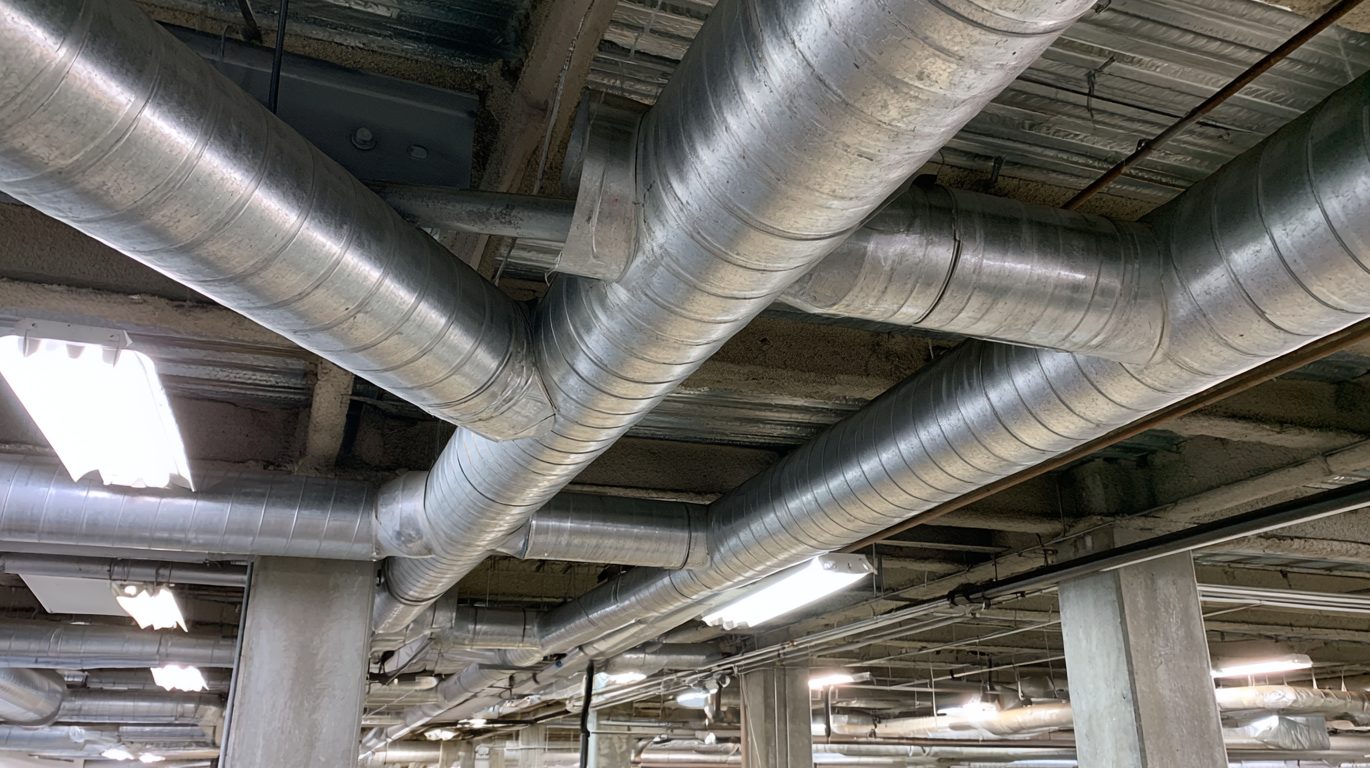
A commercial HVAC system runs on a completely different schedule than a house. Where a residential system might cycle a few times a day, an office building's rooftop unit can run eight, ten, sometimes twelve hours straight, five or six days a week, pulling far more air through the ducts than any single-family home ever sees. That volume adds up fast. Dust, paper fiber from copiers and printers, and whatever gets tracked in from the parking lot all funnel through the same return air system. In a building with dozens or hundreds of people moving through it daily, that buildup happens faster than most property managers expect. We've serviced everything from single-suite offices in San Rafael to multi-tenant retail buildings, and the amount of debris we pull out of a system that's never been serviced usually surprises the people who work there every day.
Below, we cover the signs worth acting on, what makes commercial systems different from the residential side, what a service visit actually looks like, and how often different types of businesses should be scheduling this. If odor rather than dust is the bigger complaint, especially in a space with a kitchen or break room, HVAC cleaning and deodorizing might be the better starting point instead. Homes with the same air quality concerns as a business are covered under residential duct cleaning.
Signs Your Commercial Space Needs Ventilation Service
Employee or customer complaints are usually the first signal: stuffy air by mid-afternoon, a stale smell right when people walk in, or a handful of people in the same office reporting headaches or fatigue that clears up once they leave the building. Rising utility bills without any change in usage are another common tell, since a restricted system has to work harder to move the same amount of air. Visible dust buildup around ceiling diffusers, or a return grille that's gone gray, is easy to spot during a routine walkthrough, if anyone thinks to look up. Buildings that just went through a tenant improvement or remodel are a special case. Construction dust gets pulled straight into the return air system even with the space sealed off, and that debris sits there until someone cleans it out. Retail spaces with heavy foot traffic collect an outsized share of tracked-in debris compared to their square footage, simply because a lot more shoes cross the threshold every day than in a typical office.
Why Commercial Systems Need a Different Approach
A residential system and a commercial one aren't just different sizes. They're often completely different equipment. Most commercial buildings run on rooftop packaged units, RTUs, that handle heating, cooling, and ventilation in one unit feeding a network of larger-diameter trunk lines than anything in a house. Bigger office buildings often add VAV boxes too, variable air volume dampers that adjust airflow to different zones throughout the day, and each one needs to be accounted for during cleaning so the system doesn't end up unbalanced afterward. Multi-tenant buildings add another wrinkle. Sometimes a single rooftop unit feeds several suites, which means coordinating access and scheduling across multiple businesses instead of just one property owner. We bring commercial-grade equipment built for the larger duct diameters and higher airflow volumes these systems run, not scaled-up residential tools.
Our Commercial Ventilation Service Process
We start with a walkthrough of the space and the rooftop or mechanical room equipment, mapping out the system before bringing anything in. Commercial layouts vary enough that no two jobs look the same. Work gets scheduled around your operating hours, early mornings, evenings, or weekends, whatever creates the least disruption to your business. From there, we use high-capacity negative-pressure equipment sized for commercial duct diameters, working zone by zone through the building rather than treating it as one continuous system. Return air grilles, supply diffusers, and the interior of the RTU itself all get addressed, since debris tends to concentrate at the unit as much as anywhere in the ductwork. Most single-suite offices take half a day. Larger multi-zone buildings can run two or three days, depending on how many RTUs and VAV boxes are involved. We finish with a walkthrough so building management can see the difference before signing off.
How Often Different Businesses Actually Need This
Standard office space with normal foot traffic can usually go three to five years between services, similar to a well-maintained home. That timeline drops fast for businesses with higher particulate loads. Retail spaces near a loading dock in places like Novato, medical offices with sensitive air quality needs, or anywhere with a kitchen or break room generating grease and food particulate should be looking closer to every one to two years. Older buildings running original ductwork from decades ago are worth an inspection regardless of the calendar. Systems that have genuinely never been serviced tend to have more buildup than the timeline alone would suggest. Property managers overseeing multiple units or tenants often find it easier to put every space on the same rotating schedule rather than tracking each one separately. It also helps spread the cost across the year instead of budgeting for it all at once.